Every homeowner who has watched water drip through a ceiling after a storm asks the same question: do I patch this or replace the whole roof? It is a reasonable question with a real answer, and that answer depends on three things the person standing in the attic can actually check: how much of the roof surface failed, what condition the decking is in underneath, and how many serviceable years the shingles had left before the storm arrived.
Getting that answer right the first time matters. A patch on a roof that needed replacement extends a problem instead of resolving it. A full replacement on a roof that only lost six shingles costs a homeowner several thousand dollars they did not need to spend. Neither outcome serves the homeowner, and both are avoidable with a structured inspection before any work starts.
What an Emergency Roof Repair Actually Addresses
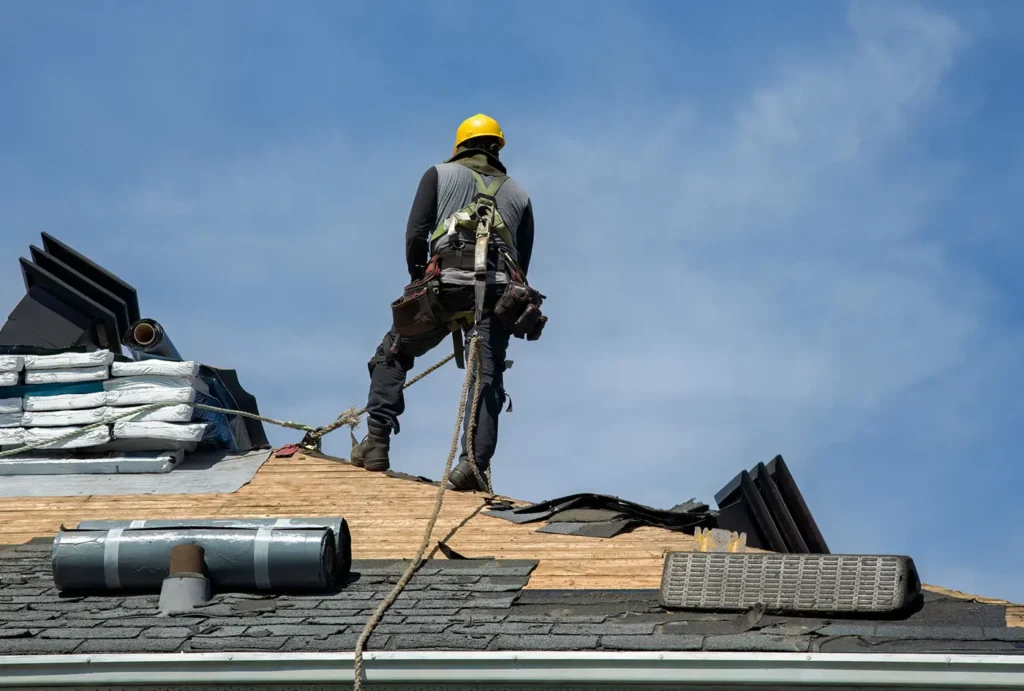
An emergency roof repair seals an open penetration or failed section, so water stops entering the structure. For homeowners needing emergency roof repair Oklahoma City, the crew isolates the damaged area, removes the compromised shingles or flashing, checks the decking beneath for saturation or rot, and closes the gap with new material that matches the existing roof system.
That scope is specific. Emergency repair does not resurface the whole field of shingles. It does not address underlying wear across sections that did not fail in the current event. It targets the breach and nothing more.
That precision is exactly what makes it the right call in the right situation. When the damage is contained, the surrounding shingles have remaining life, and the deck is structurally dry, a targeted repair resolves the problem without pulling apart a roof that is still performing.
The Four Indicators That a Patch Holds Long-Term
A repair is the correct decision when all four of these conditions are true after inspection.
- The failed area is isolated. Storm damage that concentrates in one section (a ridge line hit by a falling branch, a field of shingles on the south face that absorbed a hail strike) is repairable by definition. When the damage runs across multiple faces or covers more than 25 to 30 percent of the total roof surface, that proportion shifts the math toward replacement.
- The surrounding shingles have remaining life. A shingle’s functional lifespan runs from 20 to 30 years depending on the product grade and local weather exposure. If the roof is 8 years old and the undamaged sections are granule-intact, dimensionally flat, and well-adhered, a repair buys the homeowner a decade or more of continued performance. If the surrounding shingles are curling, losing granules, or showing surface cracking across wide areas, those sections will fail independently within the next few years regardless of what happens to the repaired section.
- The decking is dry and structurally sound. The crew lifts the failed shingles and inspects the OSB or plank decking beneath. Dry decking with no soft spots, no delamination, and no visible rot accepts new fasteners and new shingles without issue. Saturated or rotted decking requires replacement before anything goes on top of it, and the extent of that deck damage is the single biggest variable that shifts a contained repair into a larger scope of work.
- The flashing is intact at all penetrations. Chimney bases, pipe boots, skylights, and wall-to-roof transitions are the points where water finds its way in fastest after storm damage. If the failed shingles sit adjacent to a penetration and the flashing shows separation, corrosion, or lifted edges, the repair scope includes reflashing that penetration. If every penetration in the damaged zone is tight and correctly lapped, the repair is straightforward.
When all four conditions are present, a qualified roofer can repair the section, restore the watertight seal, and walk away with the roof performing at the same level it did before the storm.
The Four Indicators That Full Replacement Is the Right Call
- The damage covers a large percentage of the surface. When hail hits uniformly across a roof, the adjustment standard for most insurance carriers is total loss of the shingle layer. A roofer inspecting a hail-hit roof measures the hits per 10-square-foot test square. A threshold of 8 to 10 impacts per square generally supports a full replacement claim, because the granule layer that protects the asphalt mat has been compromised across the entire field, not just the visible impact points.
- The roof is at or past its design life. A 25-year shingle at year 22 that takes storm damage is statistically close to the end of its rated performance window. Repairing a section of a roof in its final years produces a mismatched surface and leaves the homeowner patching the next failure two years from now. Replacement on a roof near end-of-life is the more economical decision over a 5-year horizon.
- The decking shows widespread saturation or structural failure. When water has been entering the structure through an undetected leak over months or years before the triggering storm event, the decking damage extends well beyond the visible breach. Lifting shingles across multiple sections reveals the full picture. Widespread soft spots or rot require full deck replacement, which carries the total cost close enough to a full reroof that the incremental difference rarely justifies the half-measure.
- The insurance adjuster documents total loss. An adjuster who scopes the roof and documents hail damage across the full surface is making a coverage determination that aligns with replacement, not repair. Proceeding with a patch after a total-loss determination leaves the homeowner with a repaired section on a carrier-documented damaged roof, which creates complications at the next claim and at resale. When the adjuster’s scope matches replacement, replace.
What to Do in the First Hour After Storm Damage
The decisions made immediately after a storm affect both the repair scope and the insurance outcome. Three actions matter.
Document before touching anything. Photograph the roof from the ground, the attic, and any interior ceiling staining before any tarping or debris removal. The adjuster’s review depends on the condition of the roof at first discovery, and contemporaneous photos with date stamps establish that record.
Contain interior water entry. Place buckets or absorbent material under active drips and move furniture and stored items away from wet areas. Do not attempt to dry the ceiling or repaint over staining before the adjuster inspects, because that removes the visible evidence of the water intrusion path.
Call a roofer before the insurance company sends their adjuster alone. A roofer who inspects the roof independently before the adjuster’s visit has an accurate scope of the damage to compare against the adjuster’s findings. When the two scopes diverge, the homeowner has documentation to support a supplement or dispute. When a homeowner relies solely on the adjuster’s scope, discrepancies in coverage are harder to address after the fact.
The Real Cost of Getting the Decision Wrong
A patch on a roof that warranted replacement delays the inevitable and compounds the total cost. The homeowner pays for the repair, pays for the next failure, and eventually pays for the replacement anyway, often without the insurance coverage that would have applied to the original storm damage if the claim had been filed correctly at the time.
A replacement on a roof that only needed a targeted repair consumes a deductible and years of remaining shingle life that the homeowner did not need to surrender. Neither is a good outcome, and neither is unavoidable.
The decision between emergency roof repair and full replacement is not a sales conversation. It is an inspection finding. A roofer who lifts the shingles, checks the deck, counts the impacted squares, and reads the surrounding field gives a homeowner the information to make the right call with their insurance carrier and their budget. That inspection should happen before any commitment is made either direction.
For homeowners in the Oklahoma City metro navigating storm damage after a hail or tornado event, Apple Roofing provides same-day emergency roof repair response and a full scope inspection that distinguishes contained repairs from situations that call for full replacement. The crew inspects the deck, documents the damage, and gives homeowners a written estimate before any work begins.
View Trusted Oklahoma City Roofers in a full screen map
Media Contact:
Company Name: Apple Roofing
Phone: (866) 932-4708
Address: 100 NE 5th St
City: Oklahoma City
State: OK
ZIP Code: 73104
Country: United States
Website: https://appleroof.com/oklahoma-city-ok/
Social Media:
https://www.facebook.com/appleroofing
https://www.linkedin.com/company/apple-roofing-llc/