
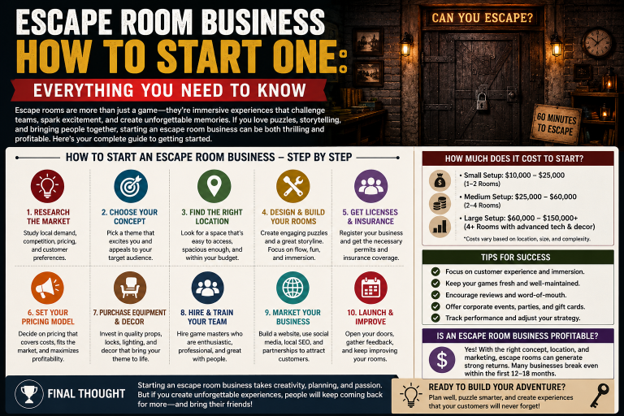
Escape rooms have changed from a curiosity into a worldwide entertainment trend. If you have ever watched a group of friends burst out of a themed room with seconds left, you have seen the magic that keeps this business growing. Now you might wonder: can I create an experience?
The clear answer is yes. However, it is not as simple as renting a space and putting locks inside. Starting an escape room business requires planning, a real understanding of what makes a deep experience work and a willingness to handle everything from fire safety rules to how long puzzles last. This guide will walk you through the journey from the first idea to the day your doors open. If you are researching how to start an escape room business, the steps below will help you understand what is involved before you invest.
Why the Escape Room Industry Still Has Room to Grow
The worldwide escape room market keeps growing with companies looking for team‑building activities and people looking for adventure. What is good news for owners is that the field has not been taken over by huge chains. Small operators who build local brands and creative themes still succeed along with franchise chains.
The market is not growing; it is also maturing. Those who succeed now invest in stories, new technology and good community ties instead of just putting a few combination locks in a room. Knowing how the market changes gives you an edge.
Step 1: Decide on Your Legal Structure and Business Model
Before you get lost in theme ideas and puzzle design, finish the foundation. Picking a type early changes your taxes, how much you can be sued for and how you pay yourself. Most owners of escape rooms choose to set up an LLC or a corporation instead of working alone because the money needed is high and you are letting people into a partly closed space where accidents can happen.
Your business style also matters. Will you run one room and use the money to open a second? Will you focus on events as your main income?. Will you aim to be a weekend spot for friends and birthday parties? There is no choice, but each idea needs different decisions about where you open, how many staff you need and how much you charge.
One key rule: the escape room market rewards those who bring people back again. Unlike a restaurant where guests come for dishes, an escape room loses appeal when someone solves it. That is why the best owners plan themes, seasonal specials or several rooms with different difficulty levels from the start.
Step 2: Secure Funding and Build a Realistic Budget
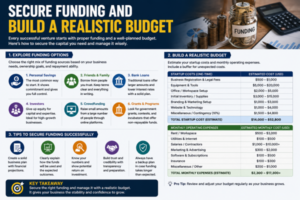
Let us look at the money. Escape room startup costs in the world usually range from about $21,000 to $130,000. The average is $60,000, but it depends on your city and how ambitious your build is. Big cost items include puzzle props, room building materials, lock systems, audio and video gear and the look and feel of the room.
The highest variable cost is rent. It changes a lot by market. In addition to rent and building work, you must pay for licenses, permits, the set of items and a deposit. Monthly running costs usually include staff pay, electricity, upkeep and advertising. These add up fast even before you sell one ticket.
The best financial choice is to create a forecast instead of guessing. Escape room businesses usually break in 14 to 24 months. Net profits usually are between 8 and 20 percent. If those numbers seem small, remember that escape rooms usually have ongoing item costs, more than stores or restaurants. Your biggest money goes up front. Stays fixed.
A word of caution: do not skimp on insurance. Escape rooms face liability risks because escape rooms deliberately place people in enclosed spaces with puzzles and mechanisms that participants may misuse. Liability coverage, property insurance for your sets and electronics and business interruption coverage are all worth the investment.
Step 3: Find the Right Location (This Matters More Than You Think)
Escape rooms have spatial needs that do not fit every retail space. You will want least 1,000 to 1,500 square feet per room plus lobby space, a briefing area and a control room for your game masters. Industrial and retail strip centers often offer the footprint at reasonable rates, but visibility and accessibility should still guide your search.
Parking is non‑negotiable. Your customers arrive in groups. If parking is a nightmare, they will remember that frustration longer than they remember your cleverest puzzle. Easy access from roads or public transit helps too, especially for corporate groups arriving after work.
Here is the part that trips up first‑time owners: your location must pass fire code inspection as an assembly occupancy. Emergency exits, occupancy limits and egress requirements all apply to escape rooms just as they would to a theatre or restaurant. Some jurisdictions have regulations about “locking” participants in—or more accurately about ensuring participants are never truly trapped. A mechanical or electronic emergency release must be accessible at all times. Your game master should have a way to immediately open any door from the control room.
Start the permitting process early. Fire inspectors and building departments do not share your enthusiasm for opening, and a rejected inspection can delay your launch by weeks or months.
Step 4: Design an Experience That People Talk About
This is where escape rooms either become memorable or become forgettable. The difference usually comes down to coherence and puzzle layering. A great room tells a story—not a sequence of locks. Players should feel like they are inside a world, not solving a math test with decorations.
Your theme should match your target audience. Horror and thriller rooms attract adults. Perform especially well around Halloween, but they limit your daytime family bookings. Adventure themes, mystery scenarios and sci‑fi concepts tend to have appeal. If you are building your room, consider a theme that can flex—something intriguing enough for date nights but accessible enough for corporate teams.
Puzzle design is a craft. The best rooms offer challenges with varying difficulty, moments where teamwork is genuinely required and a satisfying conclusion that makes players feel clever rather than lucky. Test your puzzles obsessively before opening. What seems obvious to you as the designer will confuse players in ways you never anticipated. Recruit friends, family and eventually strangers to playtest and give honest feedback.
On the side, keep things simple and reliable at first. A broken puzzle mid‑session kills the experience faster than any theme. Build a checklist so your team can turn rooms over consistently between sessions without you needing to be present every time.
Step 5: Build, Equip and Test Your Rooms
With permits in hand and a lease signed, construction begins. You can work with contractors and set designers or partner with turnkey escape room suppliers who provide everything from themed decorations to electronic puzzle components and control software. The turnkey route costs upfront but can significantly reduce your timeline and technical headaches.
Whatever path you choose, priorities durability. Props and puzzles take a beating from use and need to survive hundreds of sessions. Anti‑vandalism materials are not a nice‑to‑have—they are a financial necessity.
Your game master monitoring system typically includes a camera feed with a timer, audio and lighting controls and electronic locks or RFID puzzle components. This is your backbone. If the game master cannot see what’s happening. Cannot communicate clearly with players, even a brilliantly designed room will falter.
Budget for spare parts and a maintenance schedule. Batteries die, magnetic locks fail, and props break. A minor annoyance during a Tuesday session becomes a disaster when it happens during a fully booked Saturday.
Step 6: Hire and Train the Right People
Your game masters. Break the customer experience. They set the tone before the game monitor players during it and deliver hints without giving much away. Hire for personality and energy first—skills can be trained. Someone who genuinely enjoys watching people solve problems will outperform someone with a resume but no warmth.
Staffing needs vary a lot. Weekday mornings are slow. Friday nights and weekend afternoons are full. Escape room managers will need staff who can handle unpredictable schedules, especially during the first year when escape room owners are still learning booking patterns.
Invest in training. A game master who knows every puzzle inside the escape room, who can tell when a team is frustrated versus stuck and who gives hints that keep players proud is worth more than gold. Escape room owners should write down protocols. Make a reference guide that covers hints, how to reset tech, and emergency steps.
Step 7: Market Before You Open (and Keep Marketing After)
Build awareness before escape room doors open. Create a Google Business Profile and fill it with behind‑the‑scenes content. TikTok fits escape rooms well because the experience is visual and shareable. Post puzzle teasers and theme. Countdowns to opening day.
Corporate team‑building is a high‑value, recurring revenue stream that escape room owners should priorities early. Contact local companies, HR departments and event planners before launch. One corporate contract can fill weekday slots that might otherwise stay empty.
After launch, focus on Google reviews. A strong push in the first few weeks can set escape room ranking for months. Partner with hotels, tourism boards and event planners for referrals. Use platforms like Groupon during the 90 days—even if margin is lower, early bookings create reviews, word of mouth and repeat customers.
Social media stays the way to stay top of mind between bookings. User‑generated content—photos of winning teams holding their escape time—offers marketing that feels more real than polished ads. Learning how to start an escape room business is only the first step; consistent marketing and customer experience are what help the business grow.
Final Thoughts
Opening an escape room business is equal parts creativity and discipline. The operators who thrive are not always the ones with the biggest budget—they are the ones who plan their legal foundation early, respect fire safety rules, design rooms that tell a real story and treat their game masters like the heart of the experience.
Start small if you must, but never cut corners on safety, insurance or puzzle quality. A single bad experience can damage your reputation faster than any marketing campaign can build it. On the other hand, a well-designed room that leaves players laughing, thinking, and already planning their next visit will do more for your brand than any advertisement ever could.
With the right location, a theme that fits your local market and consistent marketing before and after launch, your escape room can become the go-to destination your community talks about for years. The industry still has room to grow—and there is still room for operators who care about doing it right.
Frequently Asked Questions
1. How much does it cost to start an escape room business?
Starting an escape room costs between about $21,000 and more than $130,000 worldwide, with a middle value near $60,000. The big spread comes from differences in location, room design and how complex the theme is. Main costs are. Theming rooms, puzzle props and electronics permits, rent deposits and early marketing. Monthly running costs—rent, payroll, utilities, maintenance—add thousands more, so escape room owners need working capital beyond the build budget.
2. Do I need licenses or permits for an escape room?
Yes. Requirements differ by place. At a minimum, escape room owners need a business license and certificate of occupancy. Because escape rooms are gathering spots, fire codes matter: emergency exits must be clear and reachable, occupancy limits must be posted, and emergency release devices must let players leave at any time. Some cities ask for a use permit based on zoning. Begin the permitting process; inspections and approvals can take weeks.
3. How long does it take to open an escape room from scratch?
If an escape room owner builds one room, expect three to six months from signing the lease to opening day, assuming no big permitting delays. Turnkey suppliers can shorten construction to one to three months. Still need time for location build‑out, inspections and marketing. First‑time owners who cut corners on permitting often end up paying rent on a space they cannot open yet.
4.What’s the popular escape room theme?
Horror and thriller stay at the top of the popularity list, especially for adults and during Halloween. Adventure and exploration themes—jungle trips, pirate ships, ancient ruins—attract age groups. Mystery and detective stories like heists and spy missions also do well. The best theme for an escape room depends on the target market: a college town might love horror while a family suburb may prefer adventure and fantasy.
5. How do escape rooms make money beyond ticket sales?
Ticket sales are the way operators earn money, but operators also look for other ways. Corporate team‑building packages can be sold at a price, and they help fill weekday slots. Birthdays, bachelor parties and team retreats can also be. Operators can charge more for these private events than for regular sessions. Some operators sell merchandise and snacks. Work with nearby restaurants. Mobile and pop‑up escape rooms are another option; operators say they can make $1,500 to $3,000 each time they set up an event. Seasonal rooms and limited‑time themes keep players coming back after they have solved the rooms.