
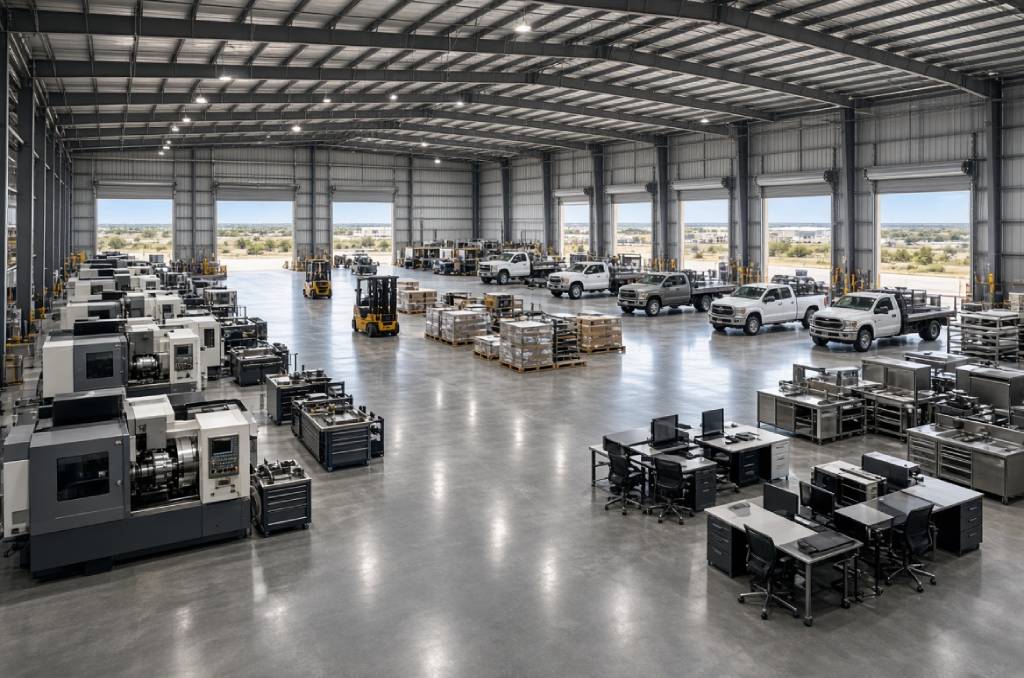
A business liquidation auction in Texas sells your equipment, inventory, and vehicles to the highest bidders in a timed sale. A skilled auction company in Texas handles the marketing, bidding, and cleanup, so you can collect your money and move on.
Closing or downsizing a business is hard enough. Chasing buyers one by one makes it harder. An auction puts every asset in front of many bidders at once, and the market sets the price.
Here is what happens at each stage, who does what, and which Texas rules matter.
What Is a Business Liquidation Auction?
A business liquidation auction is a public sale where a company sells its assets to the highest bidders. Owners use it when they close, retire, or need to clear surplus equipment.
Think of it as a yard sale run by professionals, with a much bigger crowd and a firm end date. Assets can include machinery, shop tools, restaurant gear, furniture, vehicles, and stock.
Most Texas sales now run online, so buyers can bid from anywhere. Jones Swenson Auctions, for example, has held over 1,000 business liquidation auctions in Texas since 1983.
How Does a Business Liquidation Auction Work in Texas?
Most liquidation auctions follow six steps, from the first meeting to the final payout.
Each step has a clear owner, so you are never left guessing what comes next.
- Free consultation and proposal: You share your goals and deadline. The auction company reviews your assets and sends a written proposal with the commission and fees.
- Cataloging: The team lists each item with photos, details, and serial numbers. Titles are gathered here, too.
- Marketing: A custom plan reaches buyers who want your type of equipment. Jones Swenson, for instance, emails sellers a weekly marketing update.
- Online bidding: Buyers register and bid until the timer ends. Items sell “as-is, where-is,” so buyers accept the condition and location.
- Payment and removal: Winning bidders pay and pick up their items in a set removal window. Most equipment stays on site until pickup.
- Settlement: The auction company deducts its commission and fees, pays any lender, and sends you the net proceeds.
Who Does What During the Auction?
You stay in charge of key decisions, while the auction team handles the heavy work. This split keeps your daily routine calmer during a stressful time.
| Stage | What You Do | What the Auction Team Does |
| Planning | Share goals, deadlines, and an asset list | Reviews assets and writes the proposal |
| Preparation | Gather titles, manuals, and service records | Catalogs, photographs, and sets up items |
| Marketing | Approve the plan | Promotes the sale and sends updates |
| Bidding | Answer a few questions | Runs the sale and helps buyers |
| Removal | Give site access | Oversees pickup and buyer paperwork |
How Do Liens, Titles, and Taxes Work in Texas?
Paperwork can slow a sale, so sort it out early. Texas rules cover licensing, liens, vehicle titles, and sales tax.
- Licensing: Auctioneers in Texas must hold a license from the Texas Department of Licensing and Regulation. Always ask to see it.
- Liens: You can still hold an auction if a lender has a lien on your equipment. The lender must be told, and it receives its payoff directly from the auction company. The lender then releases the lien.
- Titles: Trucks and trailers need clear titles. Texas Department of Motor Vehicles rules apply, and the buyer handles registration and taxes.
- Sales tax: Buyers pay sales tax unless they provide a signed and dated Texas resale or exemption certificate. Tax on titled vehicles is paid when ownership transfers.
How Much Does a Liquidation Auction Cost?
Most auction companies charge a commission instead of a flat fee. The rate depends on the size of the sale, so a written proposal is the only way to know your exact cost.
Jones Swenson explains that a fixed rate does not work because every auction needs different services. In general, a sale with more total value gets a lower commission rate.
A smaller sale gets a higher rate. Marketing costs are listed in the proposal, too, so you can see where each dollar goes before you say yes.
Is an Auction Better Than Selling Piece by Piece?
An auction is often faster and easier than selling items one at a time. It gives you one deadline, one buyer pool, and one payout.
Selling alone means posting ads, answering calls, and meeting strangers at your shop. That work can drag on for months, and rent keeps running.
An auction brings many bidders together in a short window, so demand sets the price. It also reduces the risk of cash scams and no-show buyers.
What Happens to Items That Do Not Sell?
Some items may not reach their price. A good auction team plans for this before the sale starts.
At Jones Swenson, staff try to sell leftover items through a private sale during the removal period.
Sellers can also ask about reserve prices. In some cases, a seller may set a reserve on a few items. Too many reserves can scare off bidders, though, so talk through your goals first.
Avoid selling items to friends before the auction. A private sale means the event can no longer be called a “Complete Liquidation.” That label attracts serious buyers because they know everything will sell.
What Should You Do Before You Call an Auctioneer?
A little prep makes the first meeting faster and your proposal more accurate. These five steps take less than a day.
- List every asset: Mark what you own, lease, or still owe money on.
- Find titles and lien details: Clear paperwork prevents delays at settlement.
- Hold off on private sales: Keep your inventory whole until the auction.
- Check your lease end date: Your removal window must fit before you hand back the space.
- Ask for the proposal in writing: Look for the commission, fees, and marketing budget.
Your Next Move
Start with a no-obligation conversation. A written proposal shows you the costs and timeline before you commit to anything.
A liquidation auction works best when you plan early and pick a team with real Texas experience.
Gather your asset list, check your titles, and call a licensed auctioneer. That one call can turn a heavy equipment floor into cash and a clear next chapter.